

Showing posts with label traditional dress. Show all posts
Showing posts with label traditional dress. Show all posts
Monday, April 25, 2011
Thursday, January 6, 2011
Hajj 1953 - around Jeddah

Here is the final set of photographs from the July 1953 edition of the National Geographic magazine, showing areas of Jeddah during the Hajj


Sunday, January 2, 2011
Hajj 1953 - Praying
Again, more images from the National Geographic from 1953. This time the photos show images of pilgrims praying in Mecca. I've also included a National Geographic video from YouTube which explains what happens when a person goes on the Hajj {see wgaw: HAJJ}.
A Muslim man who has completed the obligatory Hajj is known as Hajji [Haj-jee] whilst a Muslim woman is known as Hajjia [haj-jee-ah]


A Muslim man who has completed the obligatory Hajj is known as Hajji [Haj-jee] whilst a Muslim woman is known as Hajjia [haj-jee-ah]


Sunday, December 26, 2010
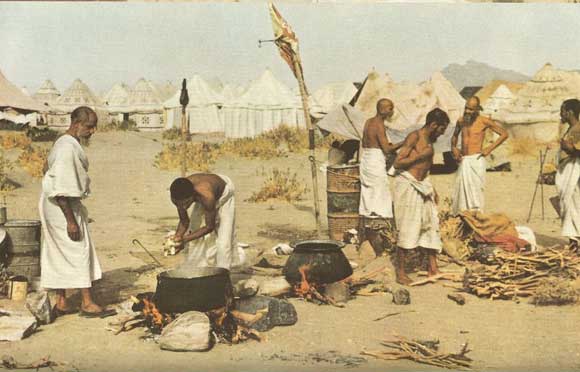
Hajj 1953 - Pilgrims
Here are some more photos from the 1953, courtesy of the National Geographic Magazine. This time they focus on the pilgrims:




Thursday, December 23, 2010
Hajj 1953 - transportation
The following photos, depicting the Hajj, are supposed to have been published in the National Geographic Magazine during 1953.
There's quite a few of them, so I've seperated them into various different topics and will post over the next week or so. This post deals with transportation:


There's quite a few of them, so I've seperated them into various different topics and will post over the next week or so. This post deals with transportation:


Friday, December 3, 2010
Saturday, July 17, 2010
Fat Arabs: it's official
When I last visited America I was amazed at how slim everyone seemed to be. At the time I put it down to being in San Fransico and being surrounded by a city of people who were simply healthy. But then I got to Florida and it was the same.
I couldn't imagine, from everything I'd read and heard about America, the people I saw in the street were slimmer on average than the people I saw in the street in the Gulf. Basically I didn't believe what I was seeing.
Turns out I was right; many Americans are slimmer, on average, than Gulfies.
Each year the Economist publishes figures which include the percentage spending of GDP on health care, average figures for literacy and clean water supplies, as well as a list of the levels of obesity.
Scarily, of the top 9 places in this particular award, 4 members of the GCC make an appearance. Only Oman and the UAE are not mentioned. Thanks to LONDONGIRL for highlighting this idea.
The cartoon below highlights changes in dress sizes before and after marriage:

Places were given as follows:
10th Place: Cyprus
Joint 8th: Bahrain
About 1 million people live in Bahrain, of which it is said 23.3% of men are obese and 34.1% of women. Overall it is thought 28.7% of the adult population is obese.
Joint 8th: Kuwait
With a population of around 4 million, it is said 28.7% of Kuwaitis are obese. 29.9% of all women have a BMI of 30 or more, compared with 27.5% of men.
7th Place: Albania
6th Place: Mexico
5th Place: Panama
4th Place: USA
3rd Place: Saudi Arabia
Population is estimated to be around 25 million people. Of these, 35.2% of adults are obese; 26.4% men and 44% women.
2nd Place: Lebanon
1st Place: Qatar
Qatar's estimated 1.5 million citizens very large indeed; 39.95% of adults are obese. 34.6% of men have a BMI of over 30 and nearly half of all women; 45.3% are obese.
I couldn't imagine, from everything I'd read and heard about America, the people I saw in the street were slimmer on average than the people I saw in the street in the Gulf. Basically I didn't believe what I was seeing.
Turns out I was right; many Americans are slimmer, on average, than Gulfies.
Each year the Economist publishes figures which include the percentage spending of GDP on health care, average figures for literacy and clean water supplies, as well as a list of the levels of obesity.
Scarily, of the top 9 places in this particular award, 4 members of the GCC make an appearance. Only Oman and the UAE are not mentioned. Thanks to LONDONGIRL for highlighting this idea.
The cartoon below highlights changes in dress sizes before and after marriage:

Places were given as follows:
10th Place: Cyprus
Joint 8th: Bahrain
About 1 million people live in Bahrain, of which it is said 23.3% of men are obese and 34.1% of women. Overall it is thought 28.7% of the adult population is obese.
Joint 8th: Kuwait
With a population of around 4 million, it is said 28.7% of Kuwaitis are obese. 29.9% of all women have a BMI of 30 or more, compared with 27.5% of men.
7th Place: Albania
6th Place: Mexico
5th Place: Panama
4th Place: USA
3rd Place: Saudi Arabia
Population is estimated to be around 25 million people. Of these, 35.2% of adults are obese; 26.4% men and 44% women.
2nd Place: Lebanon
1st Place: Qatar
Qatar's estimated 1.5 million citizens very large indeed; 39.95% of adults are obese. 34.6% of men have a BMI of over 30 and nearly half of all women; 45.3% are obese.
Saturday, July 3, 2010
Dressed for the World Cup?
Not sure if this is photoshop or for real, but in honour of the world cup, these three photos are doing the rounds:


Wednesday, June 23, 2010
Always & Forever: The Downside - Divorce [ta-laQ]
Talaq [taa-laQ] is the Islamic term for divorce and can be used by a man to end a marriage, but not by a woman. All the man needs to do to end a marriage is to say the word, "TalaQ" three times to his wife, with either no witnesses present (Sunni), or with two witnesses present (Shi'ite, Shia).
The woman has no come back and can not use the triple TalaQ should she wish to divorce {see wgaw: THINGS TO THINK ABOUT BEFORE YOU MARRY and THINKING ABOUT DIVORCE} However I did read in the paper once of a woman who swore her husband said the triple TalaQ whilst he was asleep and they were forced to divorce.
Please note, if you marry with a Muttah there is no such thing as a divorce settlement, simply because it is not thought of as a 'real' marriage in the first place {see wgaw: MUTTA}
Getting Divorced
In the Islamic world there are two main formats when getting divorced; one for Shia's and another for Sunnis {see wgaw: DIFFERENCES BETWEEN SUNNI & SHIITE}
Shia
For Shia's the divorce is publically announced after which the couple can reconcile if they wish, (it's expected they attempt to reconcile within three months of the divorce annoucement). once the three month waiting period is completed the divorce is completed, as long as two witnesses agree.
Sunni
The couple divorces the moment the husband declares a triple Ta-laQ. Islamic tradition maintains a waiting period of three months, or three menstrual cycles to ensure the ex-wife is not pregnant.
Once the divorce is finalised the couple may remarry up to three times. After the third divorce the wife must marry and then divorce another man before the couple can marry for a fourth time.
The woman has no come back and can not use the triple TalaQ should she wish to divorce {see wgaw: THINGS TO THINK ABOUT BEFORE YOU MARRY and THINKING ABOUT DIVORCE} However I did read in the paper once of a woman who swore her husband said the triple TalaQ whilst he was asleep and they were forced to divorce.
Please note, if you marry with a Muttah there is no such thing as a divorce settlement, simply because it is not thought of as a 'real' marriage in the first place {see wgaw: MUTTA}
Getting Divorced
In the Islamic world there are two main formats when getting divorced; one for Shia's and another for Sunnis {see wgaw: DIFFERENCES BETWEEN SUNNI & SHIITE}
Shia
For Shia's the divorce is publically announced after which the couple can reconcile if they wish, (it's expected they attempt to reconcile within three months of the divorce annoucement). once the three month waiting period is completed the divorce is completed, as long as two witnesses agree.
Sunni
The couple divorces the moment the husband declares a triple Ta-laQ. Islamic tradition maintains a waiting period of three months, or three menstrual cycles to ensure the ex-wife is not pregnant.
Once the divorce is finalised the couple may remarry up to three times. After the third divorce the wife must marry and then divorce another man before the couple can marry for a fourth time.
Wednesday, June 16, 2010

Saturday, January 9, 2010
Hussain al Jasmi
Hussain al Jasmi, a Saudi national, often releases singles and at discos when his songs come on, the dance floor always fills up.
Love, love, love this:


Love, love, love this:
Sunday, January 3, 2010


Sunday, December 20, 2009


Subscribe to:
Posts (Atom)





 Posts
Posts


